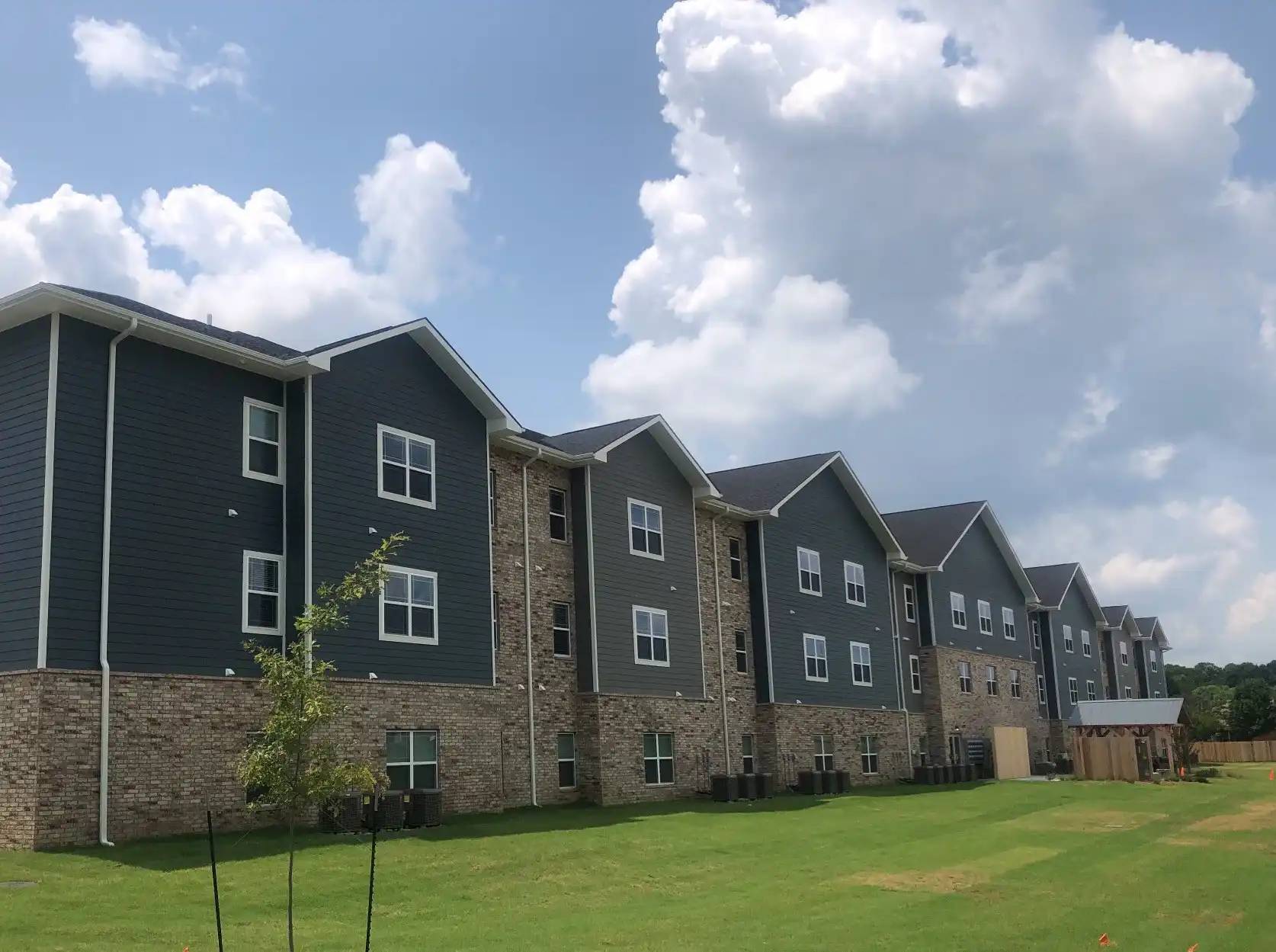
Trinity Housing Development multifamily community with gabled roofline, blue-grey siding and brick exterior under a sunny sky

Our Process

From Vision to
Move-In Day.


Every Trinity community moves through the same seven disciplined phases — refined over three decades and 50+ projects. Nothing here is improvised. Explore each phase below, or jump straight to the one you're curious about.

Typical Timeline: Land to Lease-Up

Approximate — actual duration varies by site, financing, and jurisdiction

Land ID 4–8 wksFeasibility 6–10 wksFinancing 3–6 moDesign 4–8 moConstruction 12–18 moLease-Up 3–6 moOwnership
01 — Land Identification
4–8 Weeks

01 — Land Identification

Every community starts with the right site. We evaluate parcels against demographics, local demand, access to services, and zoning realities before a single dollar is committed.

What Happens

  • Market & demographic analysis
  • Site tours & municipal outreach
  • Preliminary zoning review

Deliverables

  • Site evaluation report
  • Purchase or option agreement
02 — Feasibility & Community Planning
6–10 Weeks

02 — Feasibility & Community Planning

We pressure-test the concept — unit mix, density, and program — against real construction costs, and open a dialogue with the city and neighboring stakeholders early, not after plans are locked.

What Happens

  • Unit mix & program modeling
  • Preliminary cost estimating
  • Community & stakeholder meetings

Deliverables

  • Feasibility study
  • Concept site plan
03 — Financing & Capital Structuring
3–6 Months

03 — Financing & Capital Structuring

Affordable housing runs on complex capital stacks. Our team structures financing across LIHTC, tax-exempt bonds, soft debt, and public funding sources — and manages the applications that make it possible.

What Happens

  • LIHTC & public funding applications
  • Lender & investor negotiations
  • Underwriting & due diligence

Deliverables

  • Committed capital stack
  • Closing & funding agreements
04 — Design & Entitlements
4–8 Months

04 — Design & Entitlements

Architects, engineers, and our own construction team work in parallel so the design that gets approved is also the design that can be built on budget. We carry the project through permitting and public hearings.

What Happens

  • Architectural & civil design
  • Zoning & entitlement approvals
  • Permitting

Deliverables

  • Construction documents
  • Issued building permits
05 — Construction
12–18 Months

05 — Construction

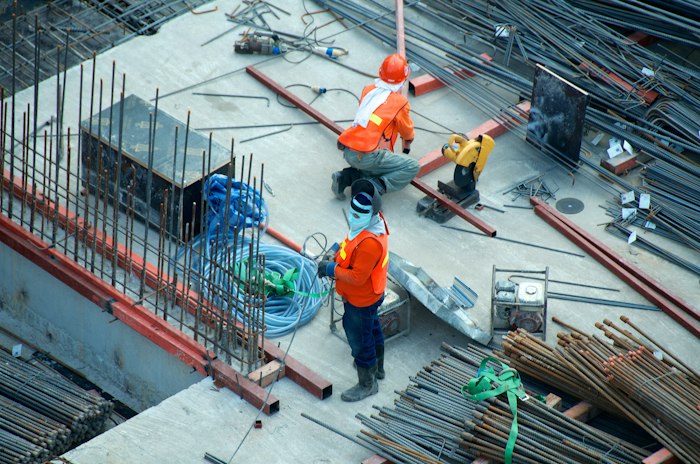
Because we're building to hold, not to flip, our construction team applies the same scrutiny to every unit. We self-manage the schedule and budget, with weekly site walks and transparent reporting to our capital partners.

What Happens

  • Site work & vertical construction
  • Weekly progress & safety reviews
  • Quality inspections at each milestone

Deliverables

  • Certificate of occupancy
  • Completed, inspected units
06 — Lease-Up & Marketing
3–6 Months

06 — Lease-Up & Marketing

Marketing starts well before the first unit is ready. Our management partners run a coordinated lease-up — income qualification, waitlists, and move-in logistics — so residents move in as soon as units are ready.

What Happens

  • Pre-leasing marketing campaign
  • Income qualification & waitlist management
  • Move-in coordination

Deliverables

  • Stabilized occupancy
  • Signed resident leases
07 — Long-Term Ownership
Ongoing

07 — Long-Term Ownership

This is where our process differs most from a typical developer's: we stay. As long-term owners, we're invested in every community's condition and reputation for decades — not just through the ribbon-cutting.

What Happens

  • Professional property management
  • Preventive maintenance programs
  • Resident services & engagement

Deliverables

  • Annual condition & capital plans
  • A community built to last
~22 mo

Average Land-to-Lease-Up Timeline

96%

On-Budget Project Delivery

50+

Communities Delivered

30+

Years Refining This Process

Common Questions

About Our Process

On average, about 22 months from acquiring a site to a stabilized, fully leased community. Timelines shift with financing complexity, local approval processes, and site conditions — smaller infill sites can move faster; larger LIHTC deals with public funding typically take longer.

Both. Many of our projects start with sites we identify ourselves, but we regularly partner with municipalities, housing authorities, and landowners who already control a site and need a development partner to take it from concept to completion.

It depends on the project, but our affordable housing deals commonly draw on Low-Income Housing Tax Credits (LIHTC), tax-exempt bond financing, state and local housing trust funds, and conventional or agency debt, layered together into a single capital stack.

As long-term owners, we stay involved through professional management partners who handle day-to-day operations, leasing, and maintenance — while our team oversees capital planning and long-term asset performance.

The same seven phases apply, with added steps during Design & Entitlements for historic tax credit applications and preservation review, and often a more involved Feasibility phase to assess the existing structure's condition.

Ready to Start the First Phase?

Tell us about your site, your city, or your idea — we'll walk you through what the process looks like for your project specifically.